

Surgery doesn't end at discharge
Recovery has historically been treated as a secondary phase of care, fragmented and under-measured after discharge. Discover how recovery now drives surgical outcomes, patient experience, and operational performance.
What we cover
- Recovery variability
- Post-surgical engagement
- Behavioral and psychosocial risk
- Recovery adherence
- Value-based surgical care
- Outpatient recovery trends
- Operational recovery infrastructure
- Patient recovery experiences
- Predictive recovery intelligence
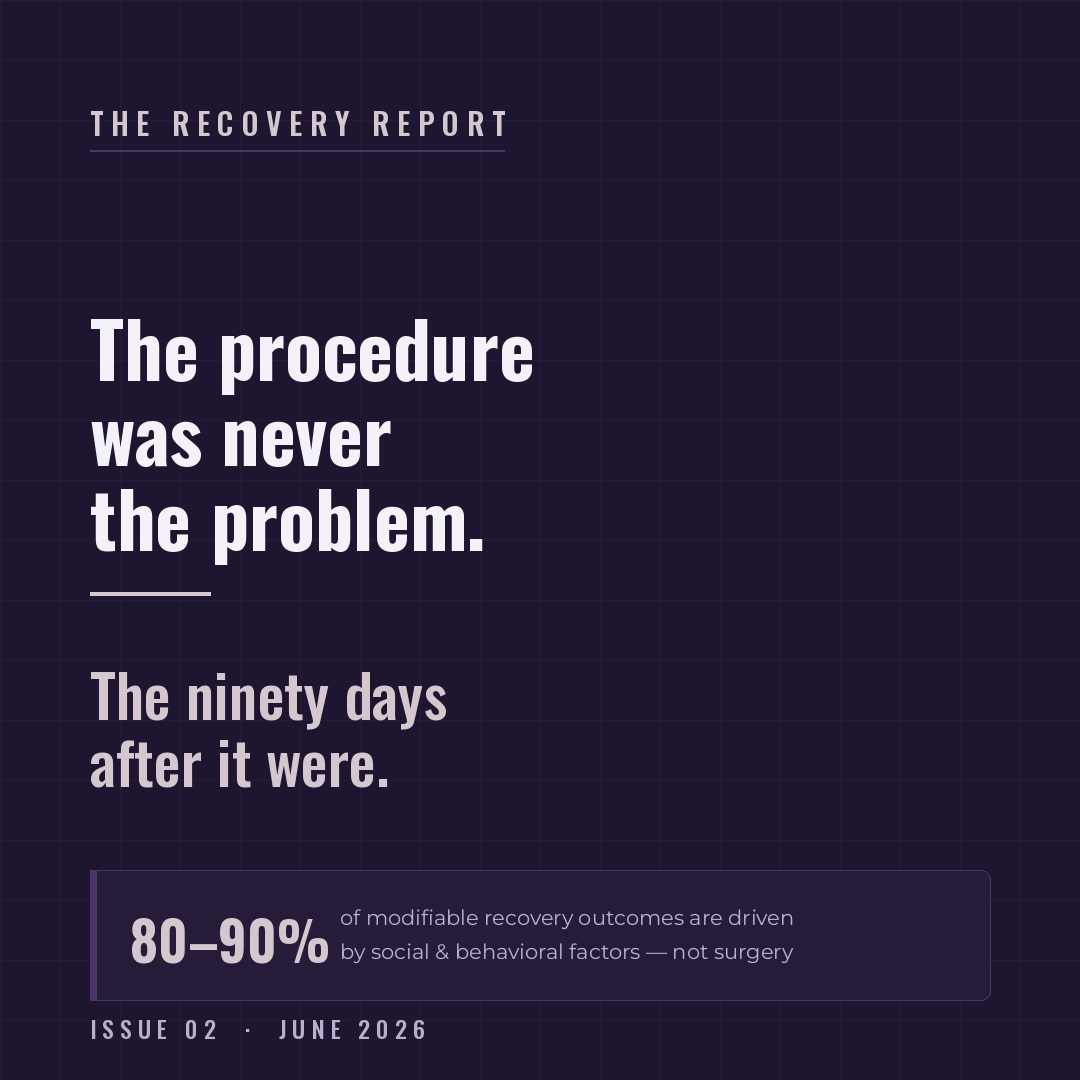
Why It’s a Structural Problem, Not a Clinical One
Rising readmissions look like a quality problem, tighter technique, better protocols, the right surgeon. The evidence says otherwise. The American College of Surgeons estimates that 80–90% of modifiable health outcomes are driven by social and behavioral factors, not medical care. The operating room was rarely the problem. The ninety days after it were. This issue breaks down why the recovery gap is structural, not clinical, and what purpose-built recovery infrastructure actually looks like.
The 90-Day Problem Nobody Planned For
CMS just made hospitals financially responsible for what happens after patients go home. Most don't have infrastructure to manage it.
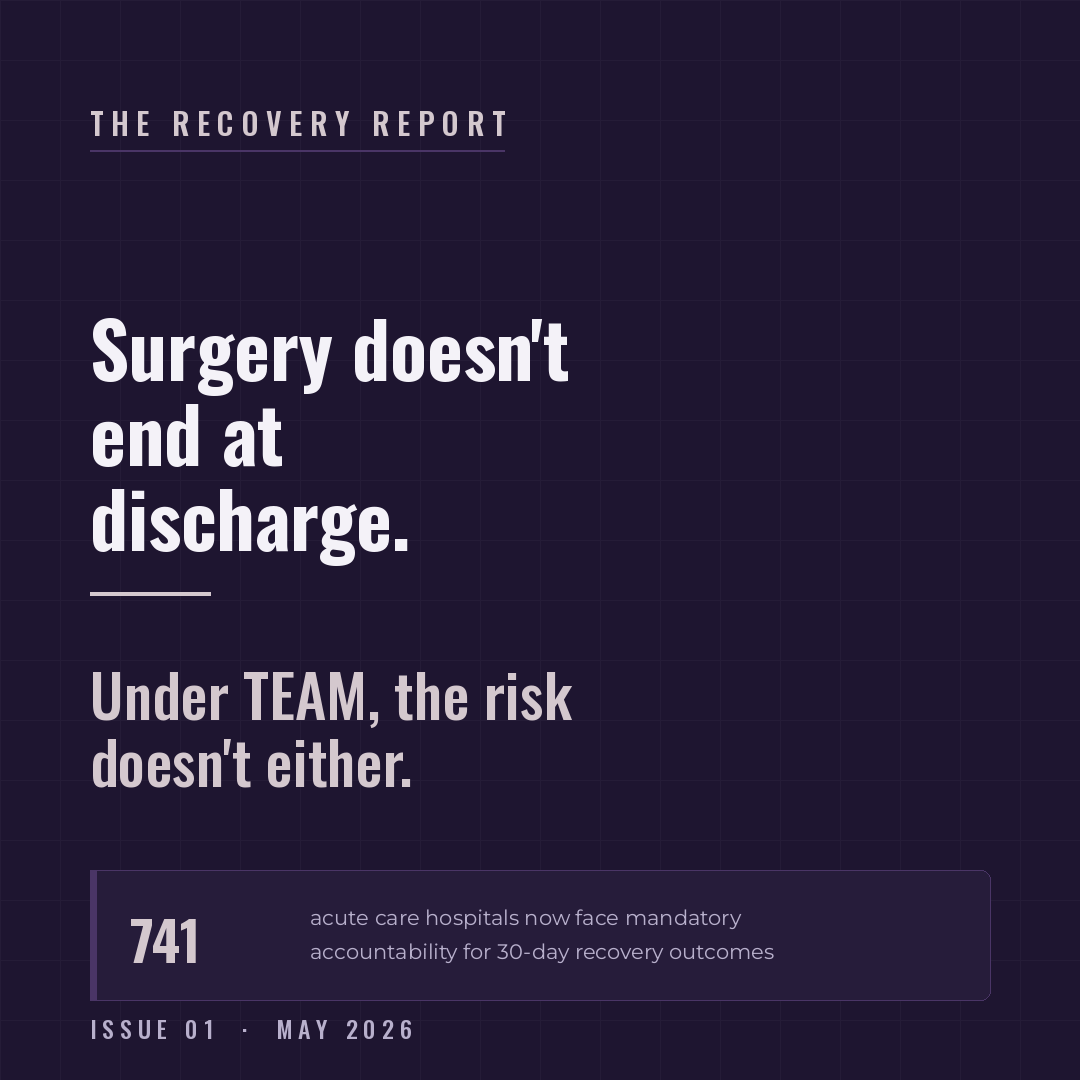
Beginning January 1, 2026, CMS activated the Transforming Episode Accountability Model (TEAM), a mandatory bundled payment program that shifts financial responsibility for post-surgical outcomes onto acute care hospitals. For 741 hospitals across 188 markets, this is not voluntary.
Surgery does not end at discharge—and under TEAM, the financial exposure doesn't either. This article explores the structural gap hospitals face in recovery management and why the predictable risks of post-operative care are now directly impacting the bottom line.